initializing Ana Software Developer

I hold a professional degree in Application Design and Development, and this September I'll be starting a Master's program in Computer Science and Mobility. Over the next two years, I'll mainly be focusing on artificial intelligence, cybersecurity, algorithms, distributed systems, and IoT. An ambitious and demanding program. If it were easy, it wouldn't be nearly as fun. 😎 At the end of the day, what draws me the most is software architecture, data modeling, and the impact technical decisions have on applications.

I work on the assumption that there is no universal solution. Technical decisions only have value when they fit the context and constraints of the project. I see myself primarily as a back-end developer. That's where business logic, security, data integrity, and a large part of architectural decisions come together. I've also worked on the front-end, which gives me a broader understanding of how applications fit together. In a team, I naturally gravitate toward back-end development. In more autonomous environments, I take ownership of development and adapt my role to the project's needs and constraints. A back-end is never invisible, it always shows through the limits of the interface. That's why I think from the perspective of the end user, without forgetting the more creative ones... the ones who try to push or bypass the system.

One day, I'd love to contribute to projects related to astrophysics or space exploration. Work alongside passionate people who are deeply invested in what they do. Never lose the joy of learning... or of sharing it.

Ana

Réalisations

ANASTASIA-VOJKIC.DEV
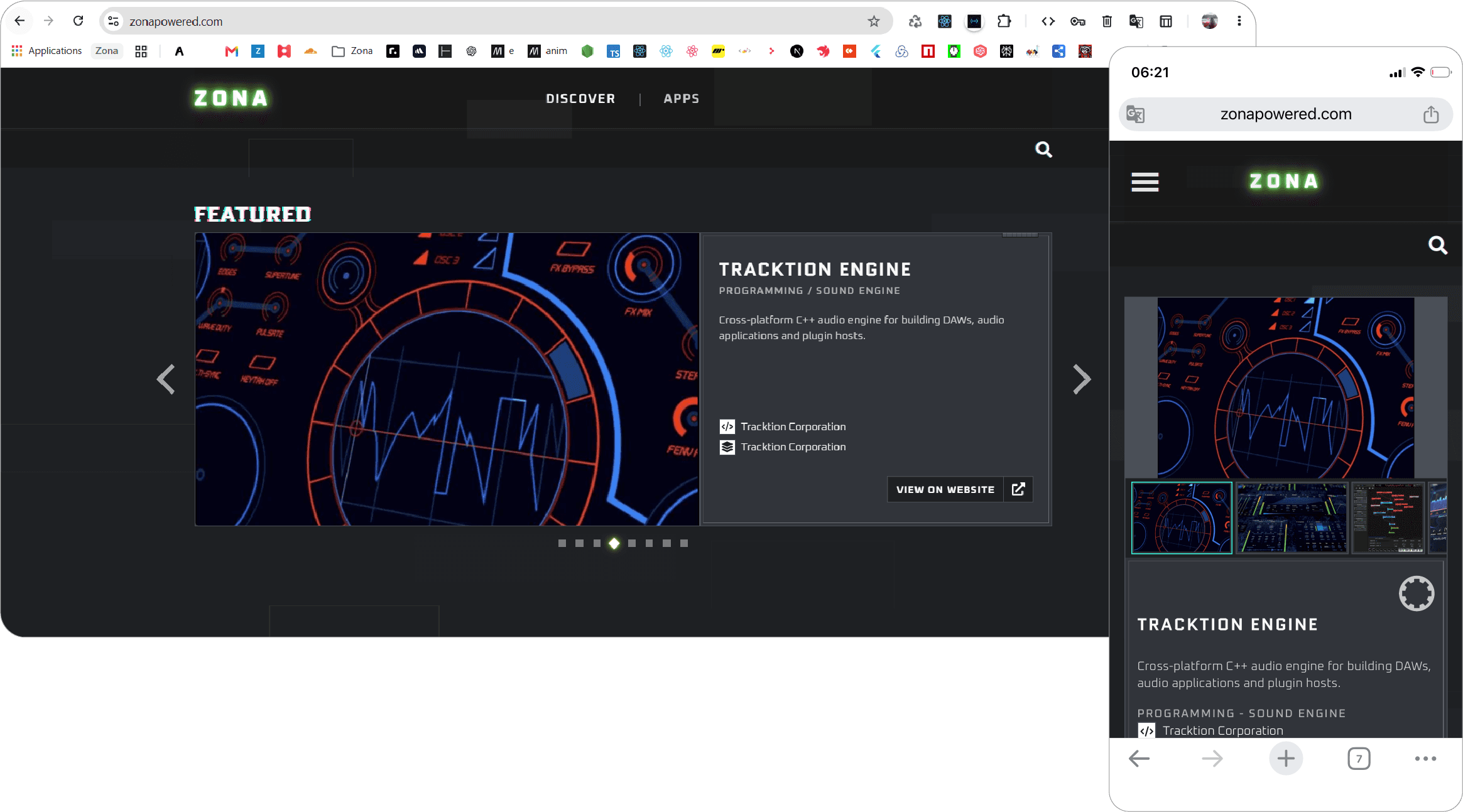
Zona homepage displayed on desktop and mobile, showcasing featured software.

Zona v1.0

Audio Software Distribution Platform

Zona is an audio software distribution platform inspired by Steam. It is designed for musicians, sound designers, audio developers, content creators, as well as audio professionals and enthusiasts.

Zona is now live, and its visual identity has been completely redesigned. After months spent building the architecture, backend, and infrastructure, the platform finally has a design that matches its ambitions.

The journey is only just beginning. The next phase focuses on expanding the catalog, refining the user experience, and developing Zona V3, paving the way for an even richer platform.

View details
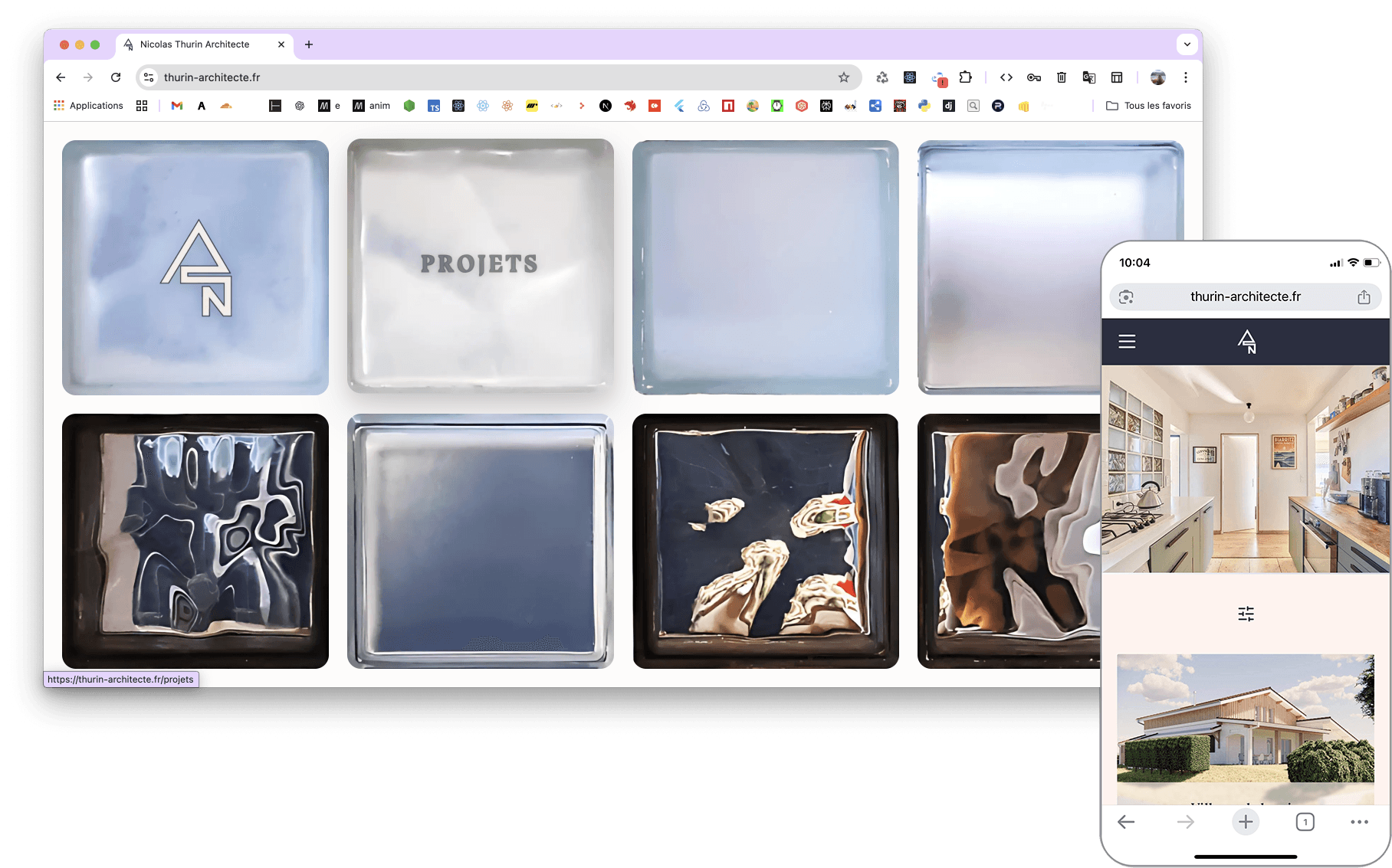
Nicolas Thurin Architecte

Thurin Architecte

Showcase website & admin interface

Custom development of architect Nicolas Thurin’s website, replacing a previous site that had become difficult to maintain.

It goes beyond a simple showcase, focusing on building a tool tailored to real usage, with an admin interface that is simple, intuitive, and designed for its actual use.

A large part of the work involved anticipating and structuring needs in order to deliver a solution without relying on a precisely defined request.

View details
Agendapp

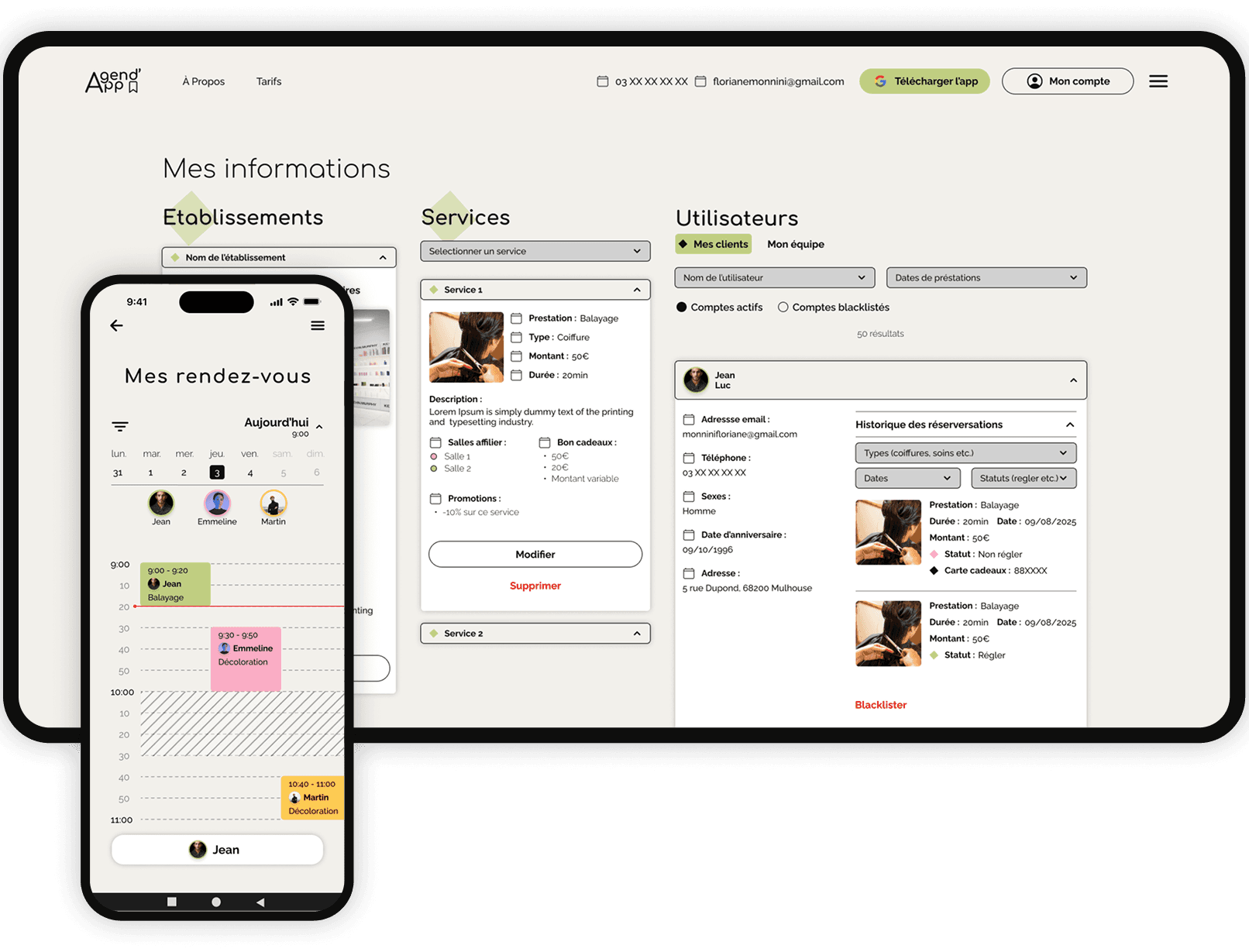
Agend’App

Management and booking tool for wellness professionals

Agend’App is a platform designed for professionals in the beauty and wellness industry. It centralizes the management of their activity, including human and material resources, as well as appointment booking on the user side, through a web administration interface connected to a mobile application.

As part of this project completed during my internship, I contributed to the back-end design within the team, while independently developing the web administration interface. The work focused on the management of establishments and related entities, one of the two core areas of the data model alongside user management.

graphic design -Floriane Monnini
back-end -Jérôme Duguet,Jérôme Picavet,Anastasia Vojkic
mobile development -Floriane Monnini, Jérôme Duguet
web admin interface -Anastasia Vojkic
View details
Belle gosseZipnocchioÉnervéMichtoLourdingueK.OShhhuuutDiablo

SWAP IT UP !

Solo dev challenge

A guided project I really enjoyed working on. It allowed me to combine structure, problem-solving, and creativity — everything I enjoy in coding.

Despite its simple appearance, the game relies on several underlying mechanisms such as combination detection, chain reactions, and dynamic grid updates. I first built it in React.js before rewriting it entirely in TypeScript to establish a cleaner and more structured foundation.

While revisiting some mathematical fundamentals, I identified ways to optimize the game logic. I also implemented a "best hint" system to improve move detection, with additional optimization ideas such as a backtracking-based approach suggested during discussions with my brother, who is also a developer.

The project is currently being refactored.

Contact